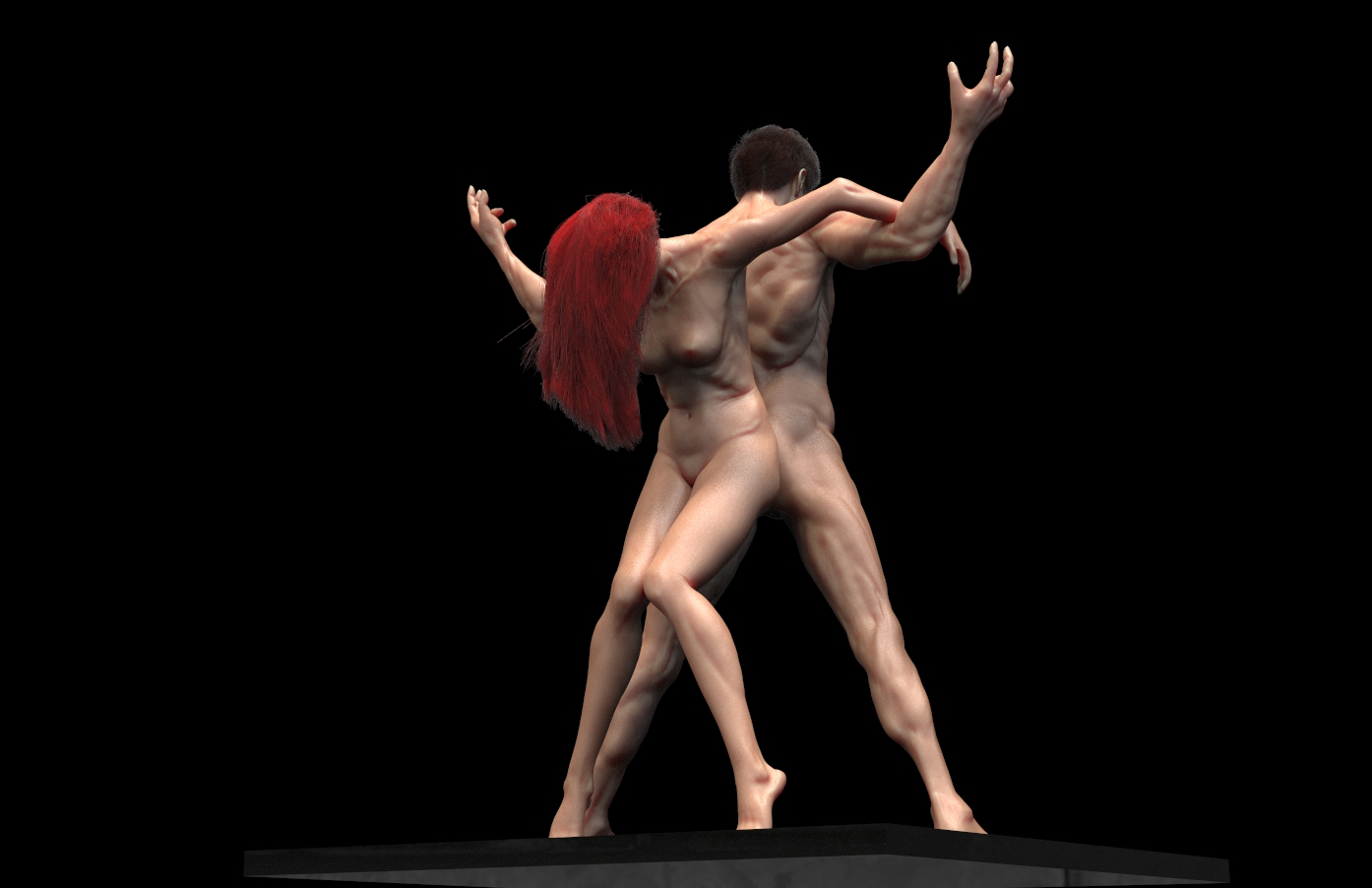
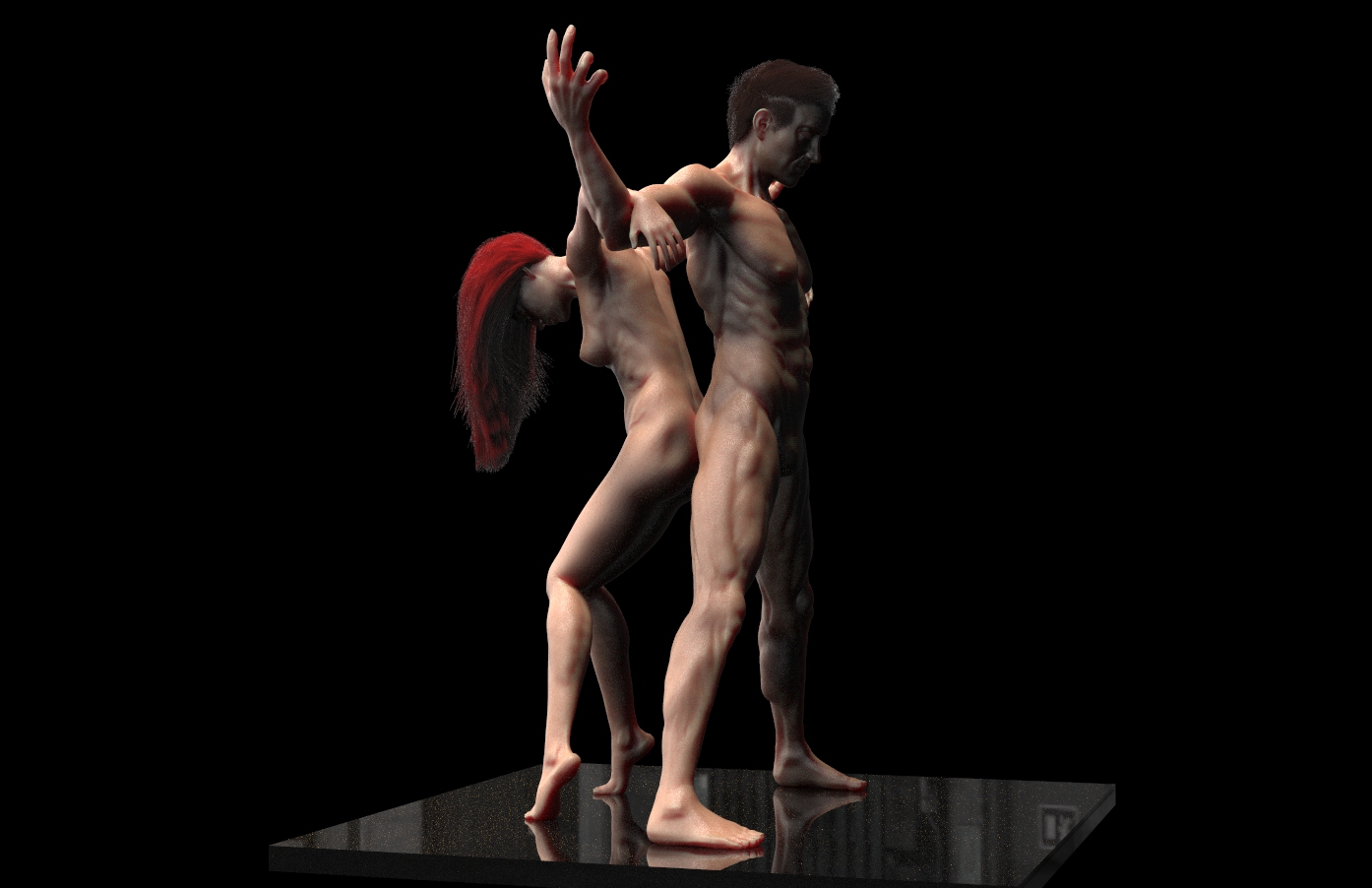
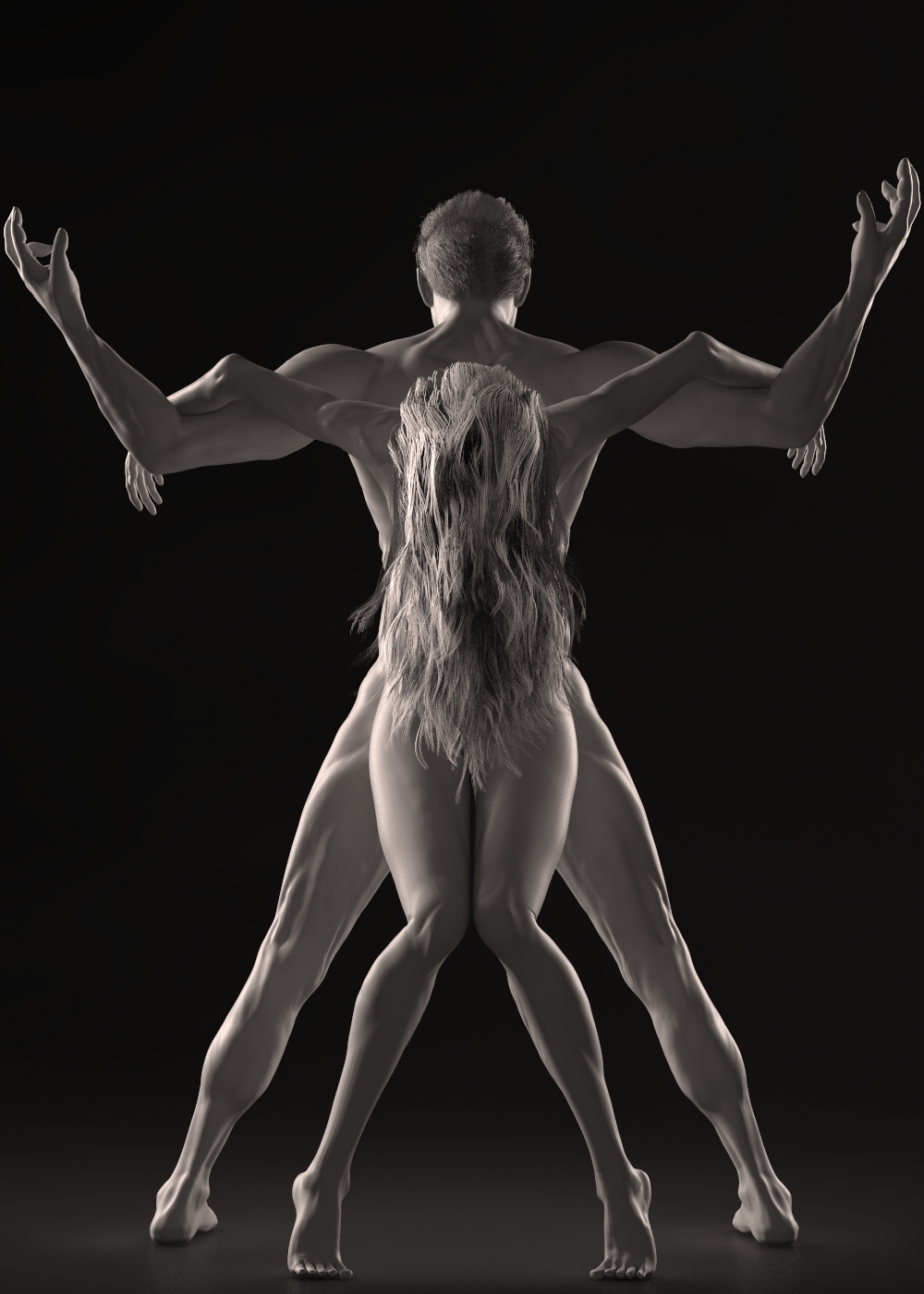
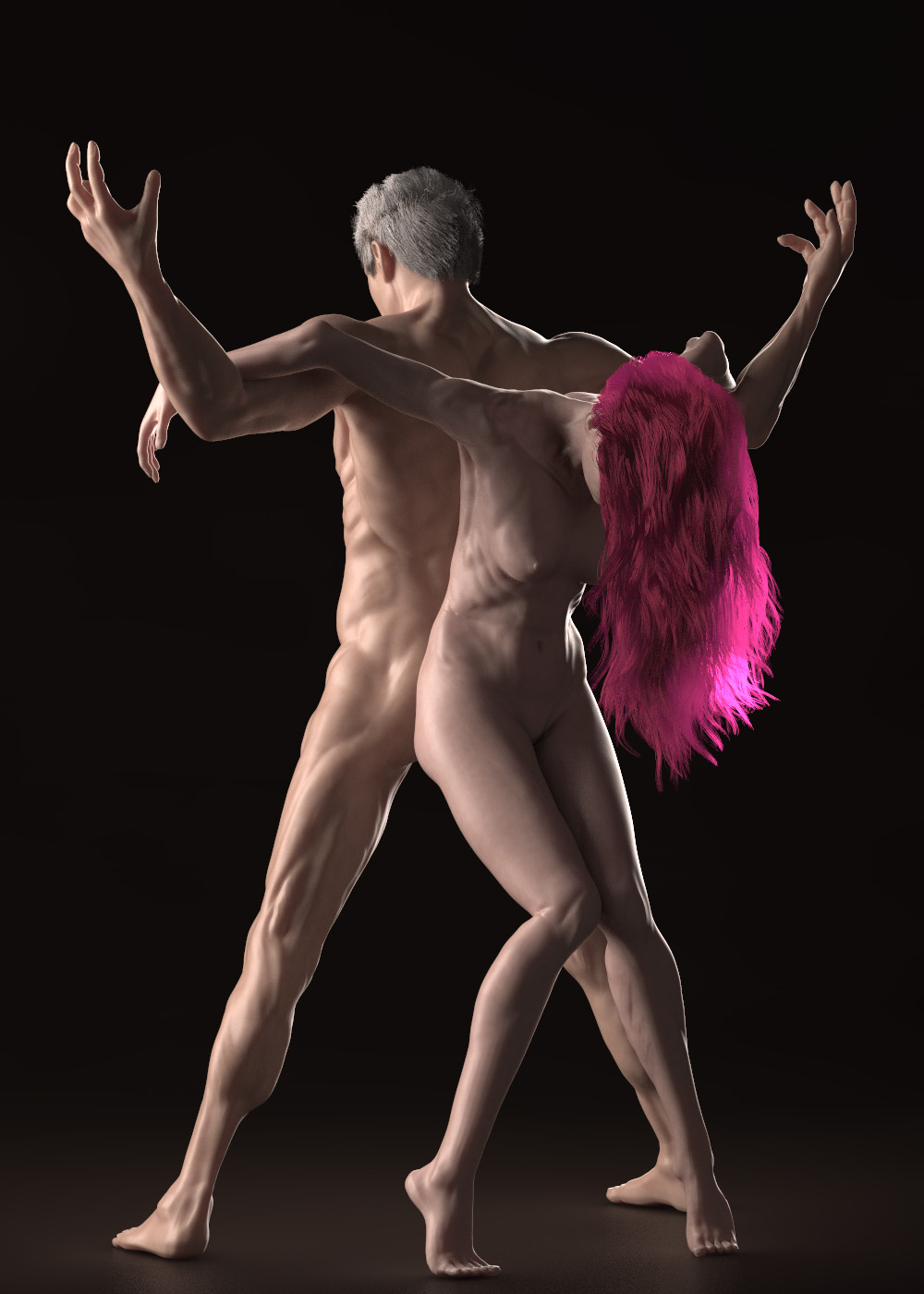
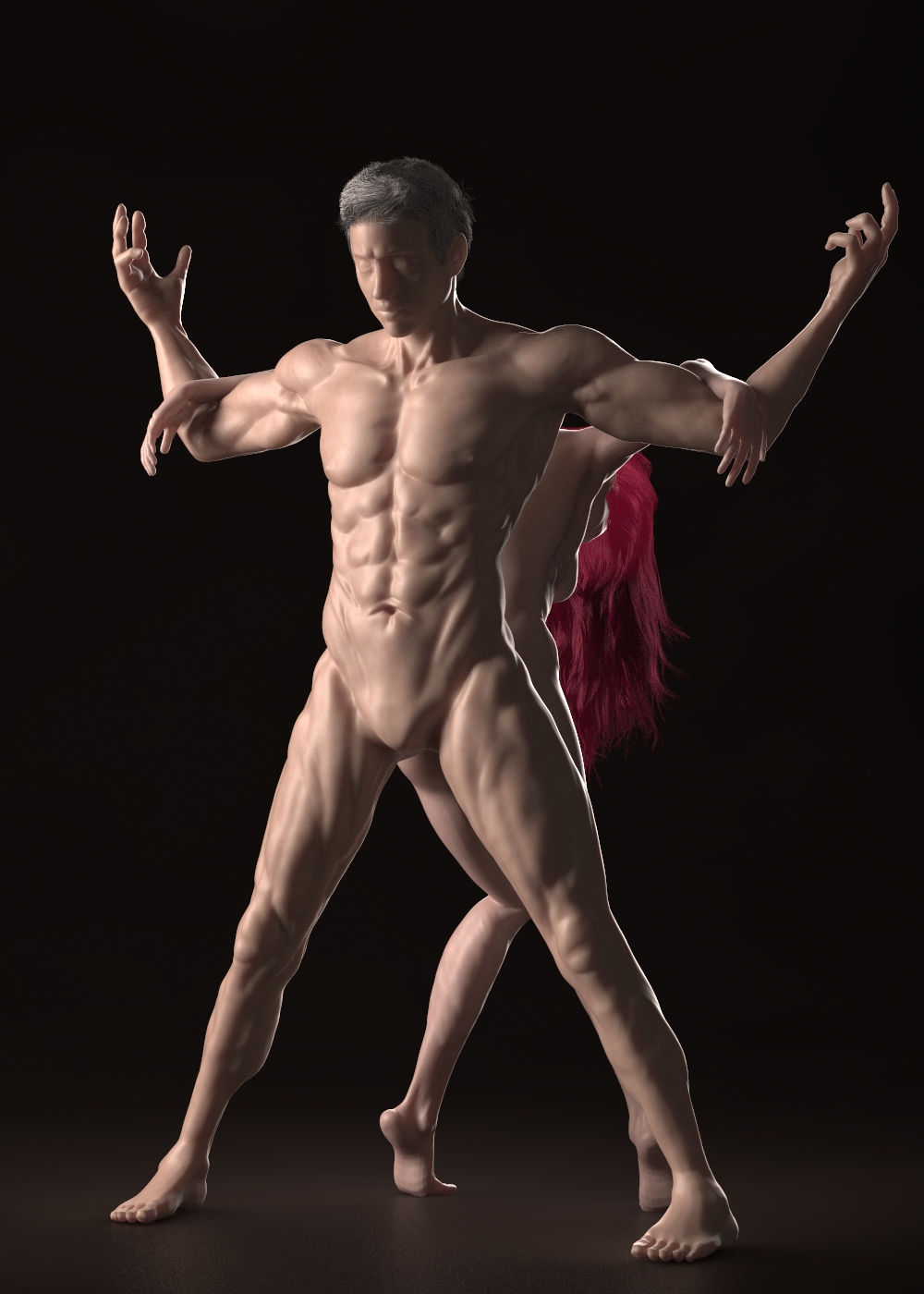
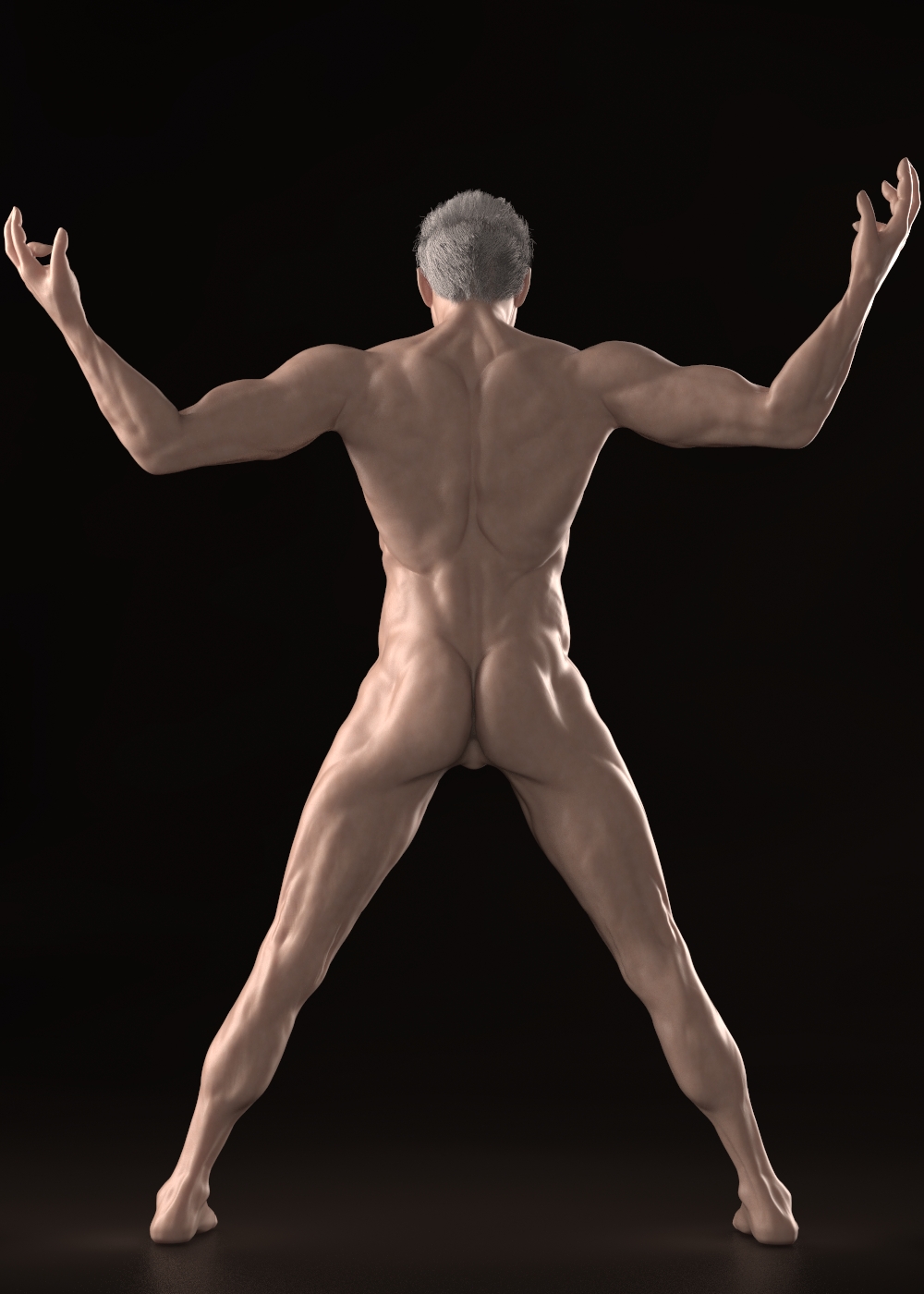
Congrats for taking on the arduous task of really learning anatomy - it’s well worth the journey!
You’re off to a pretty good start so far, honestly.
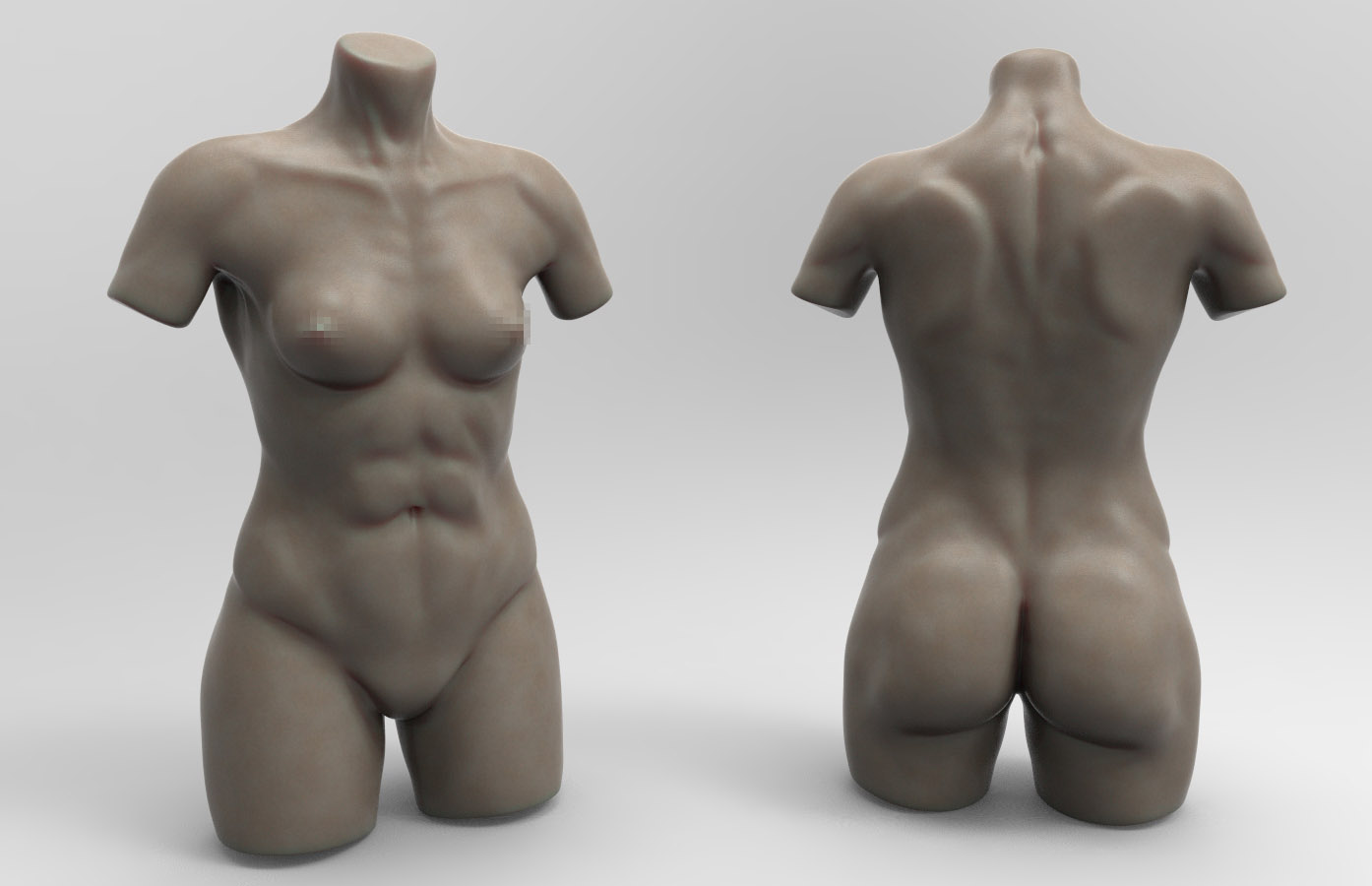
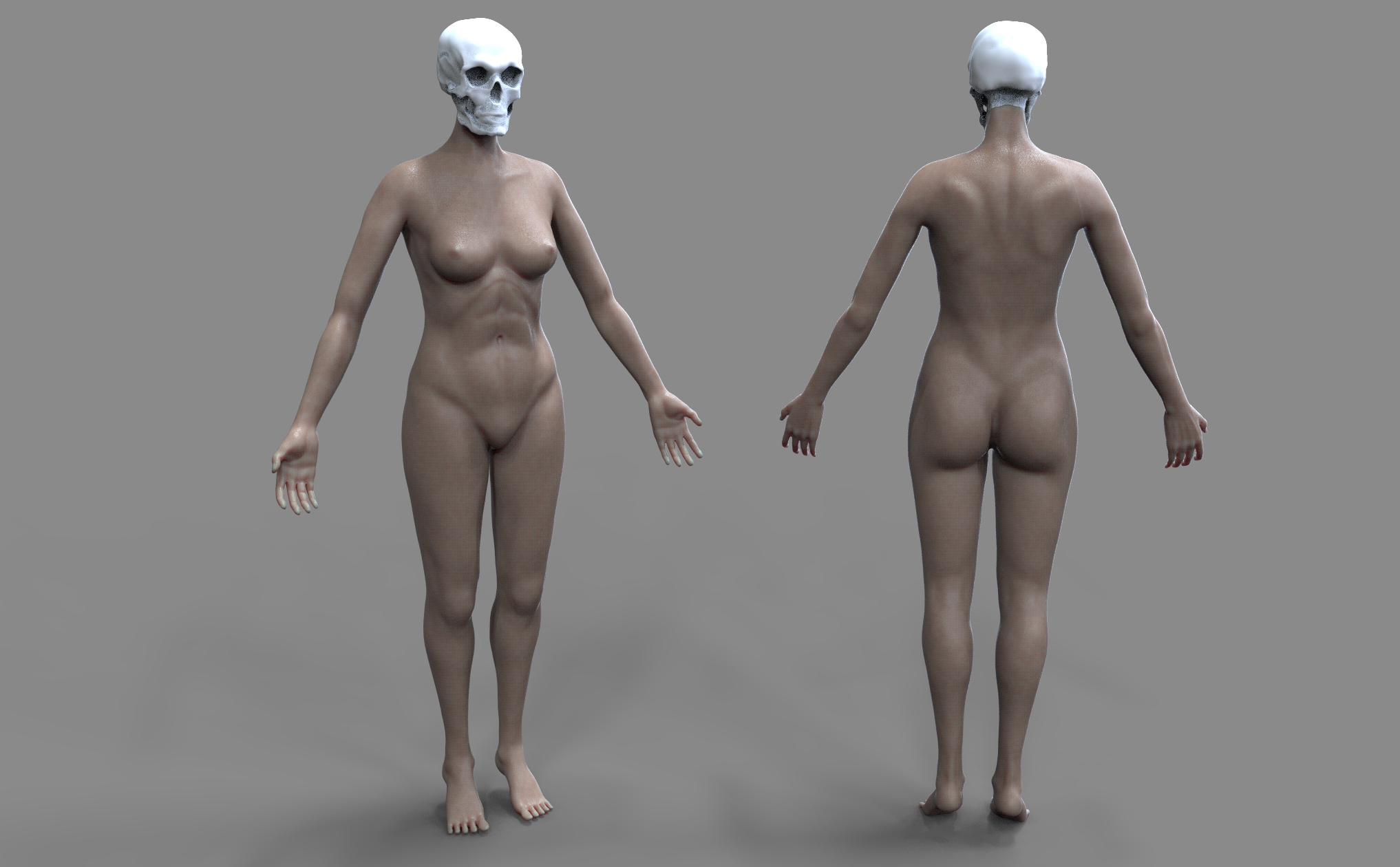
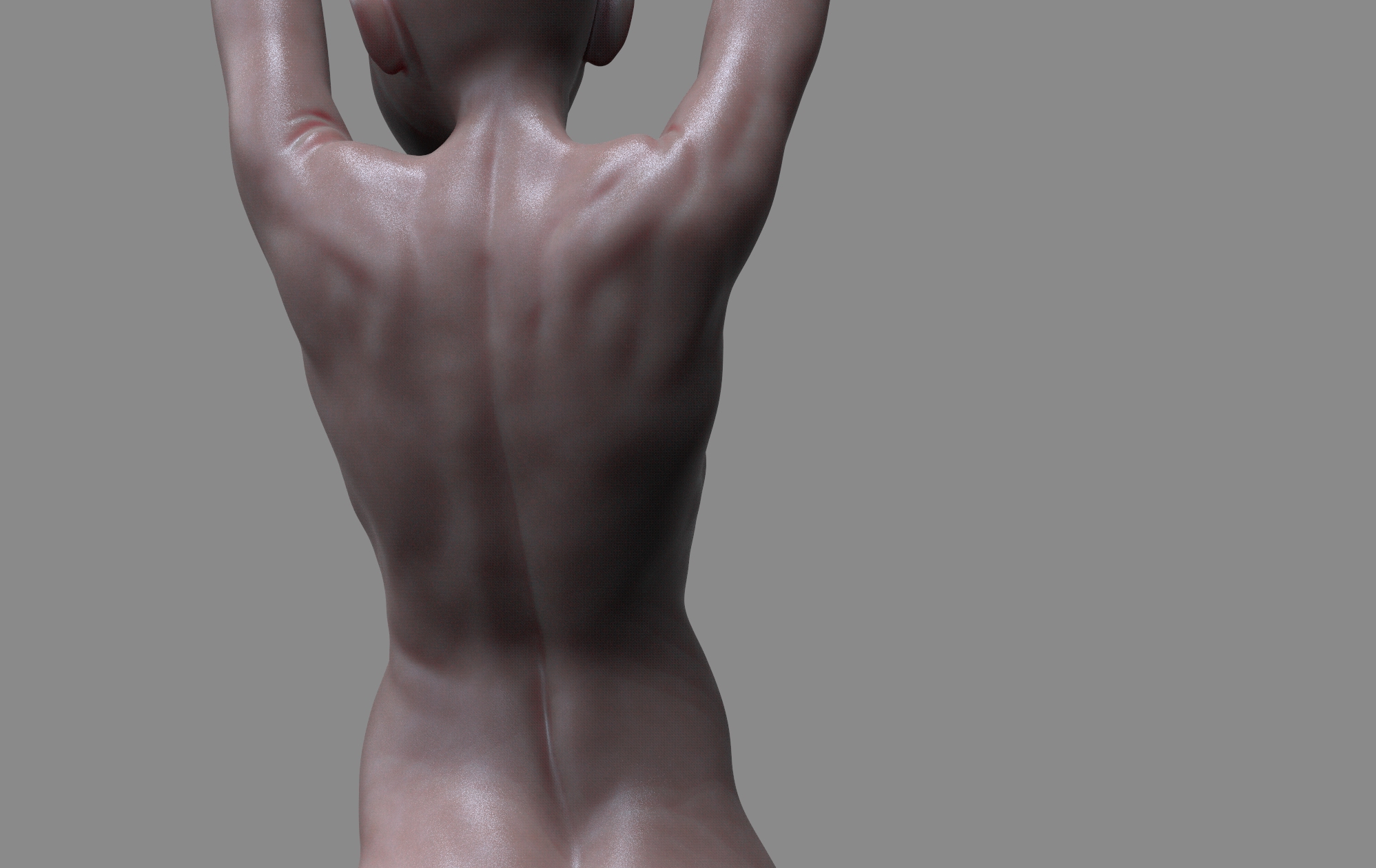
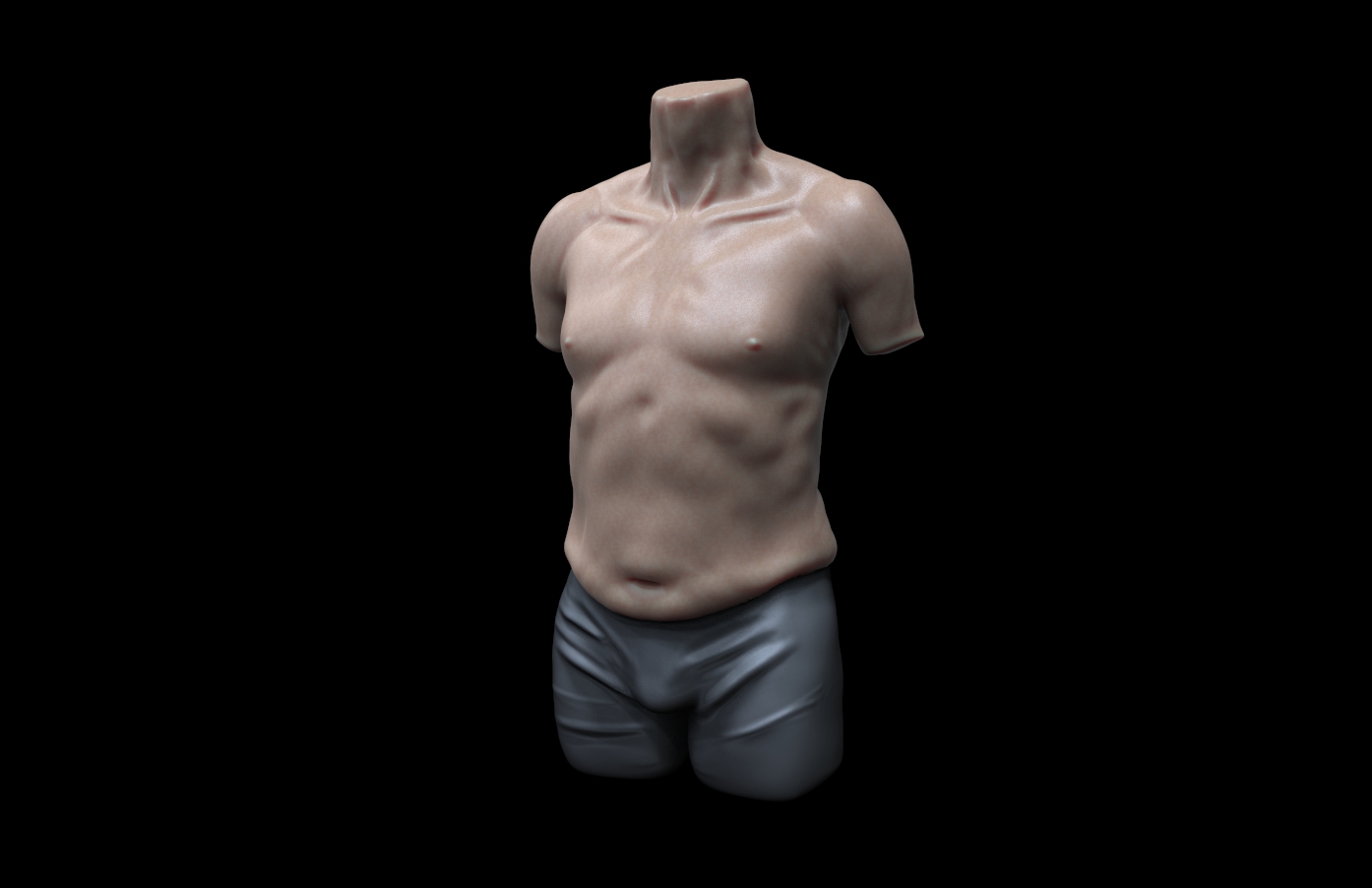
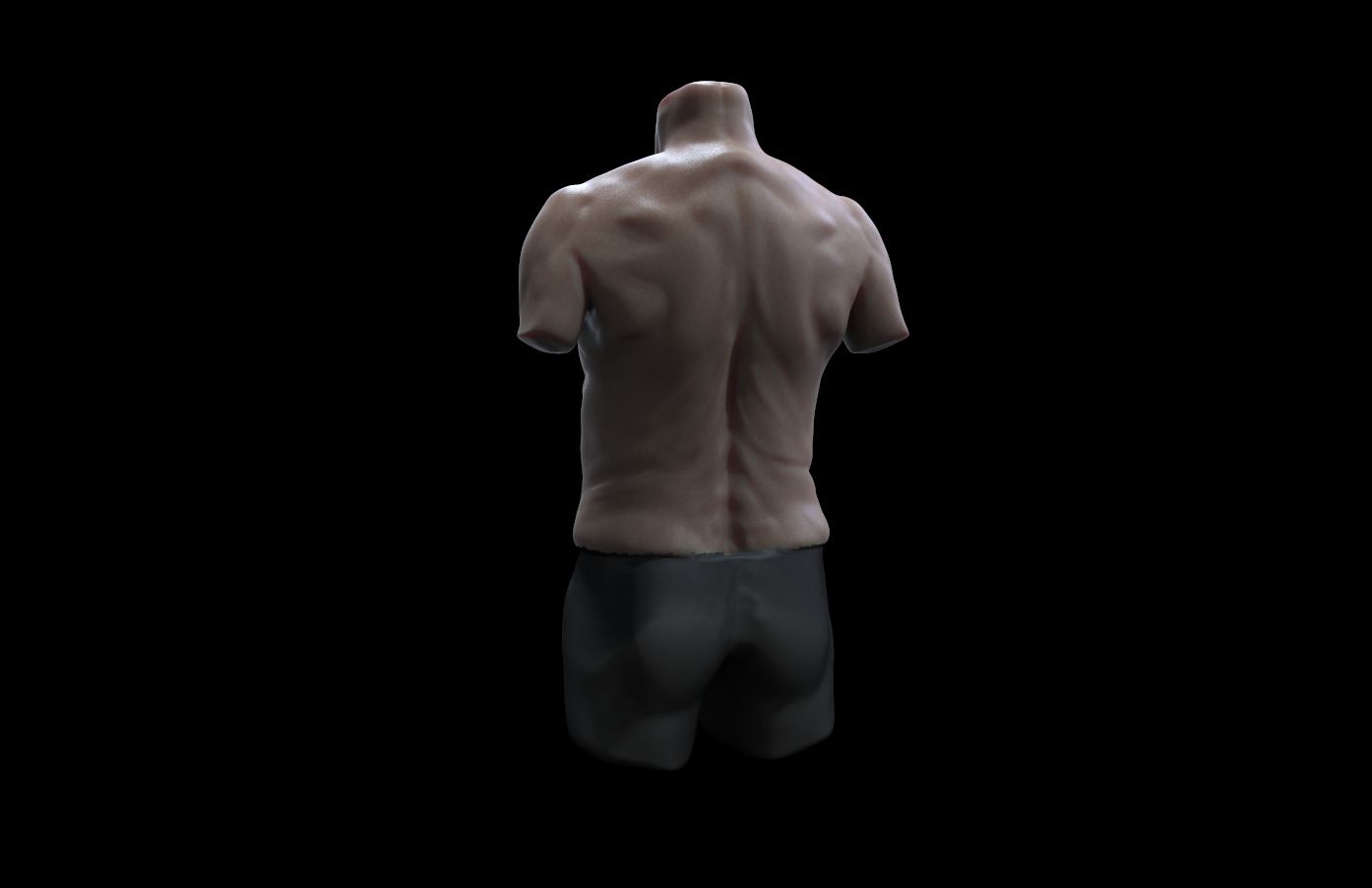
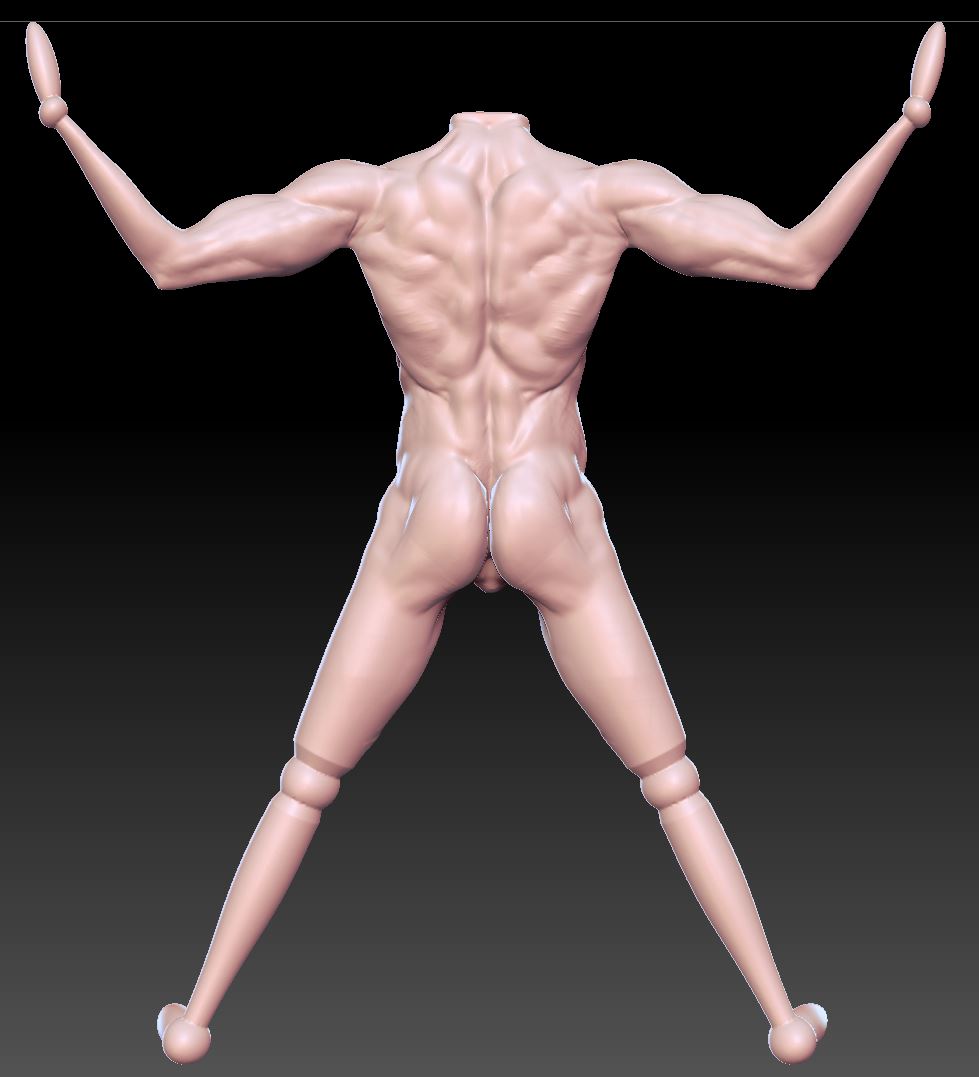
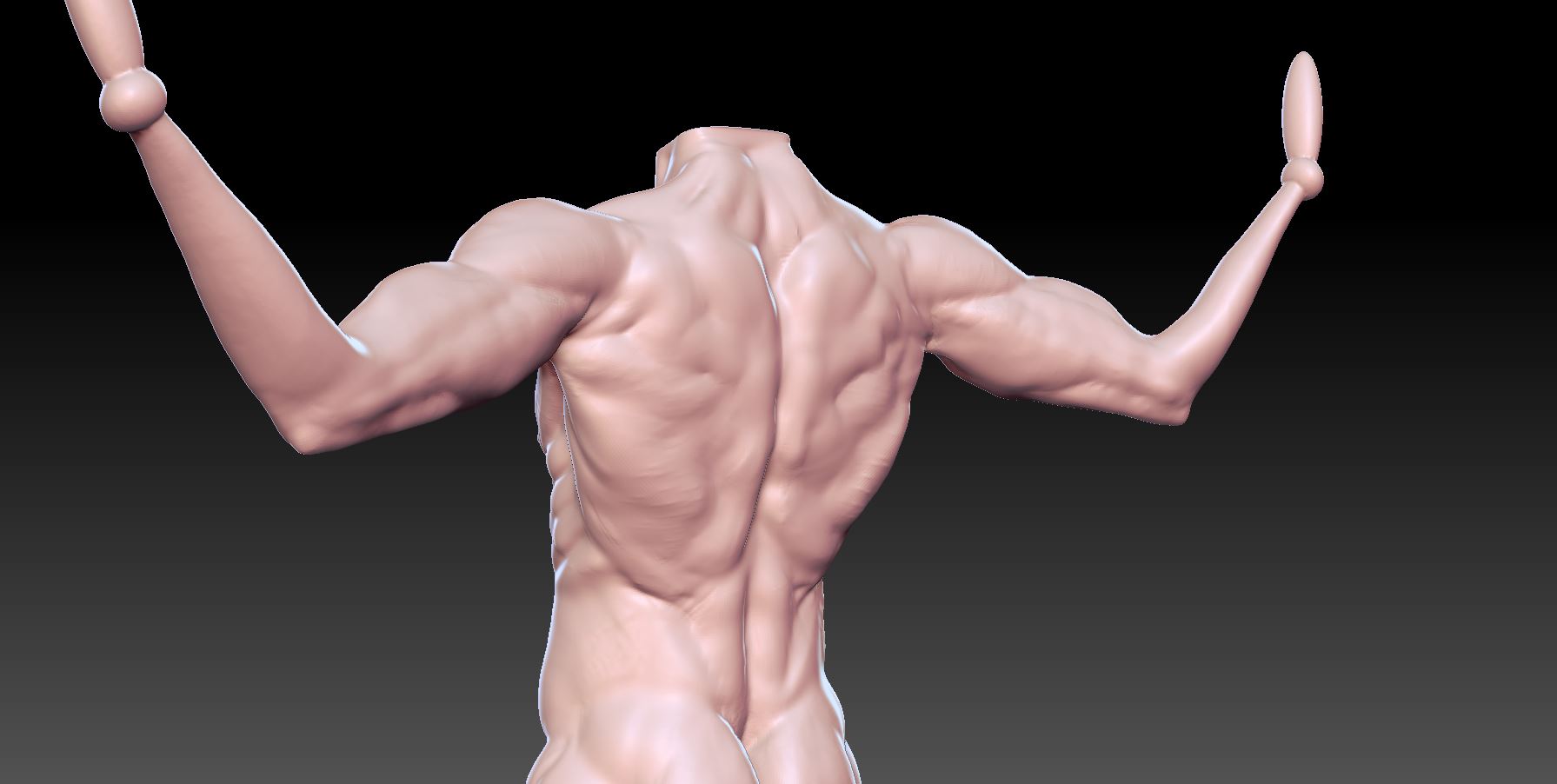
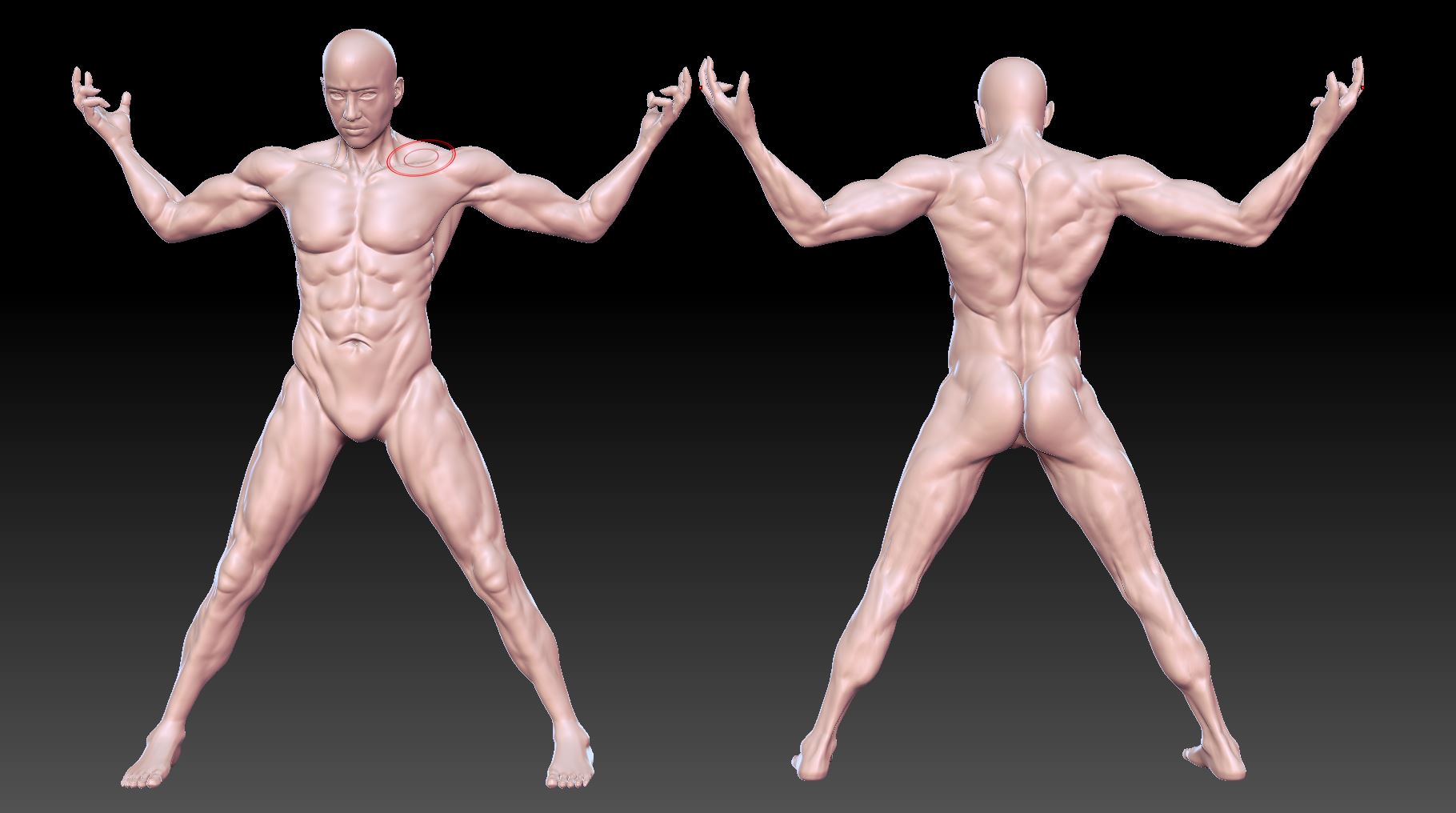
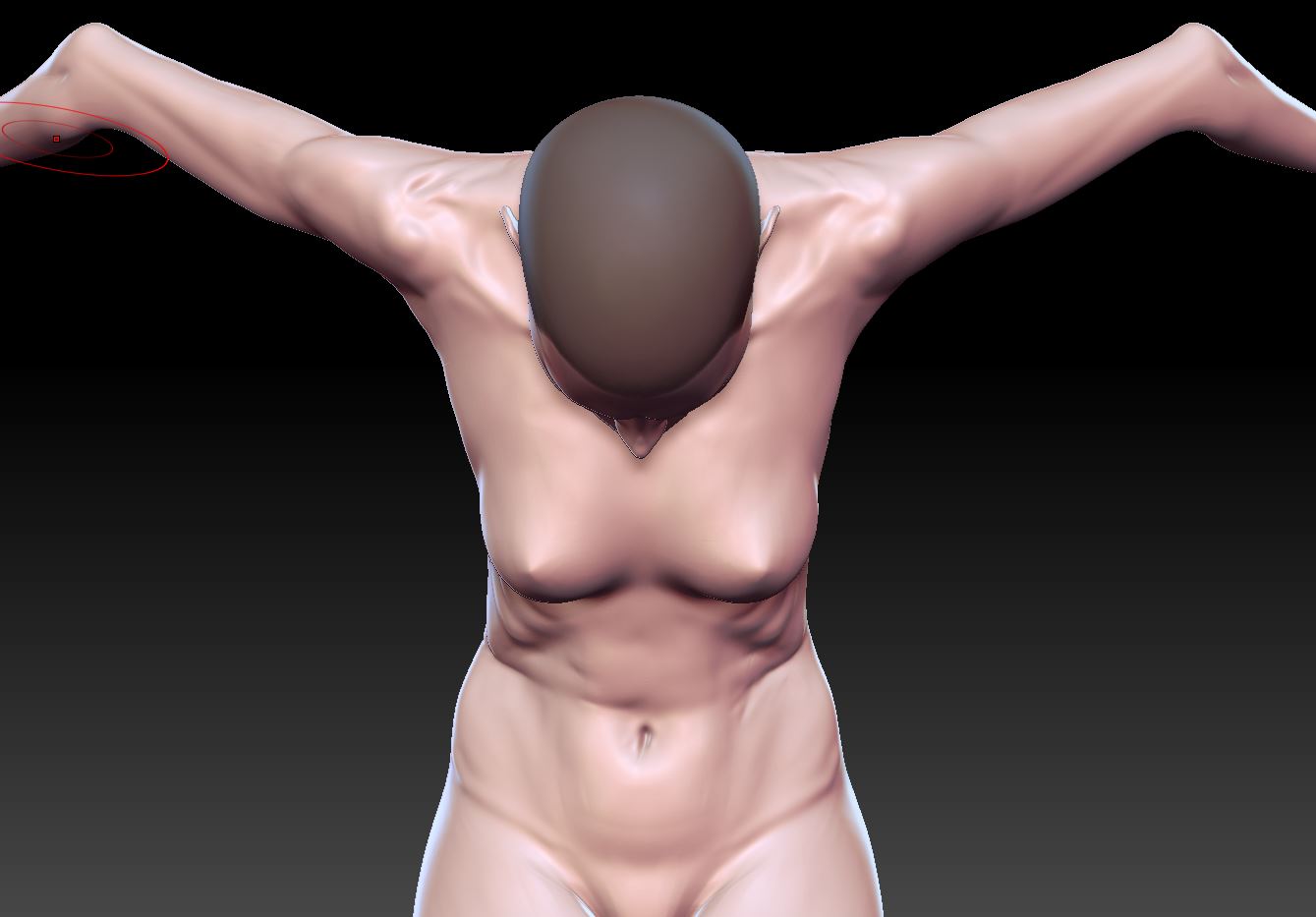
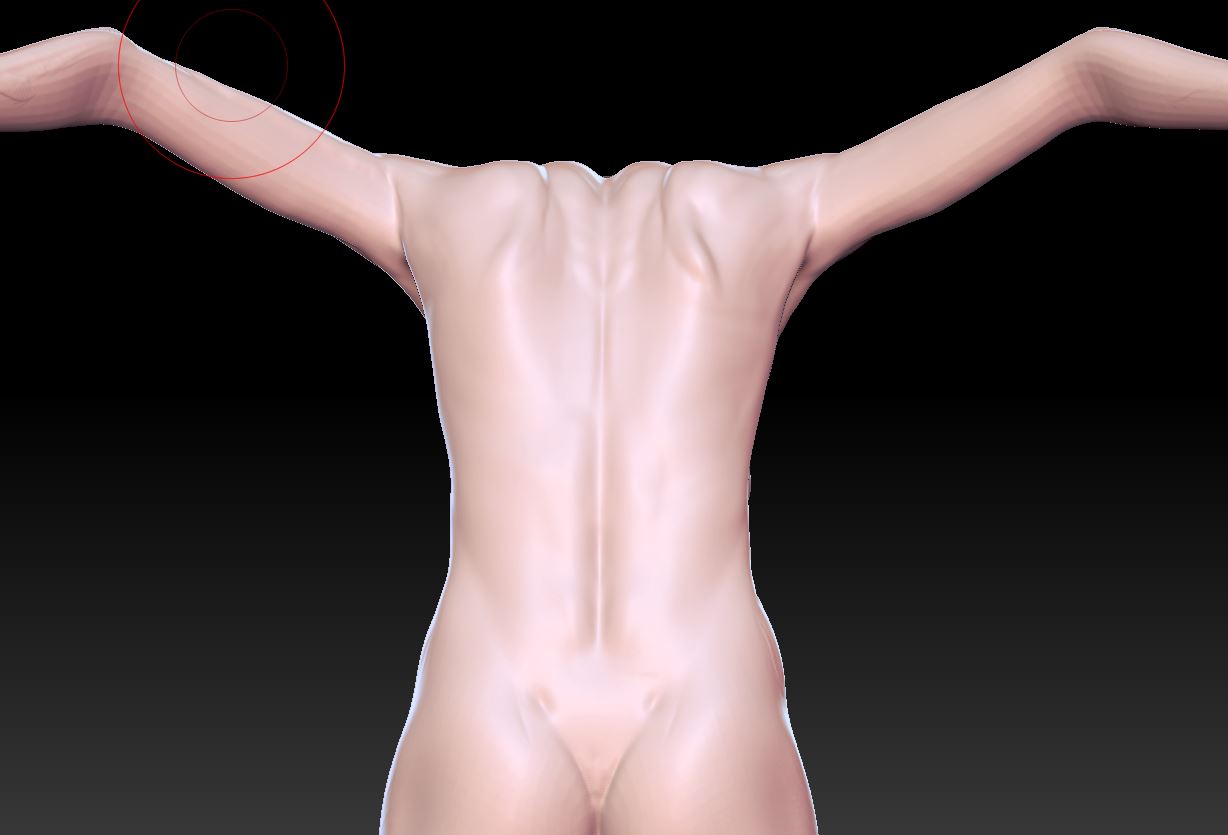
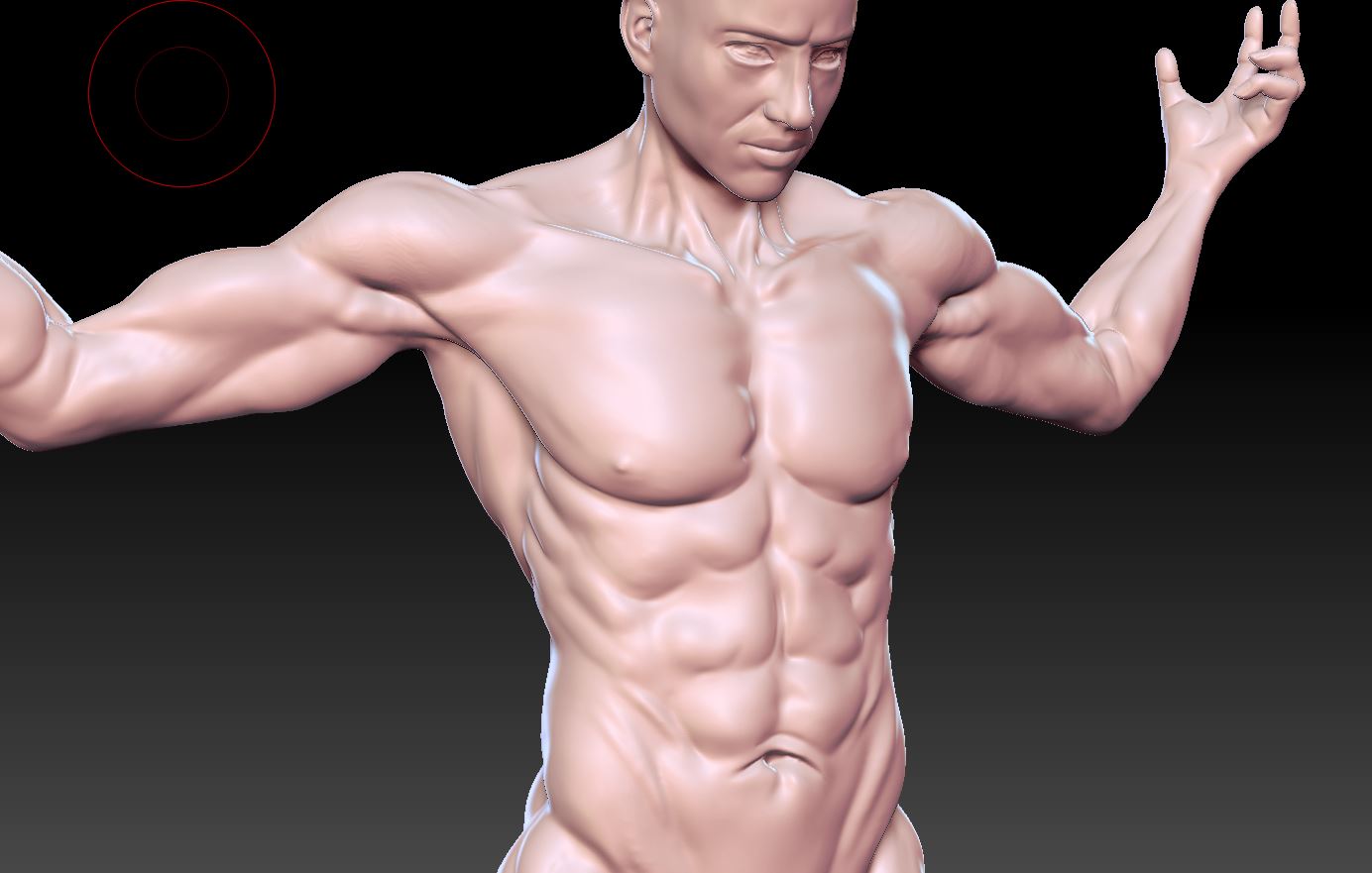
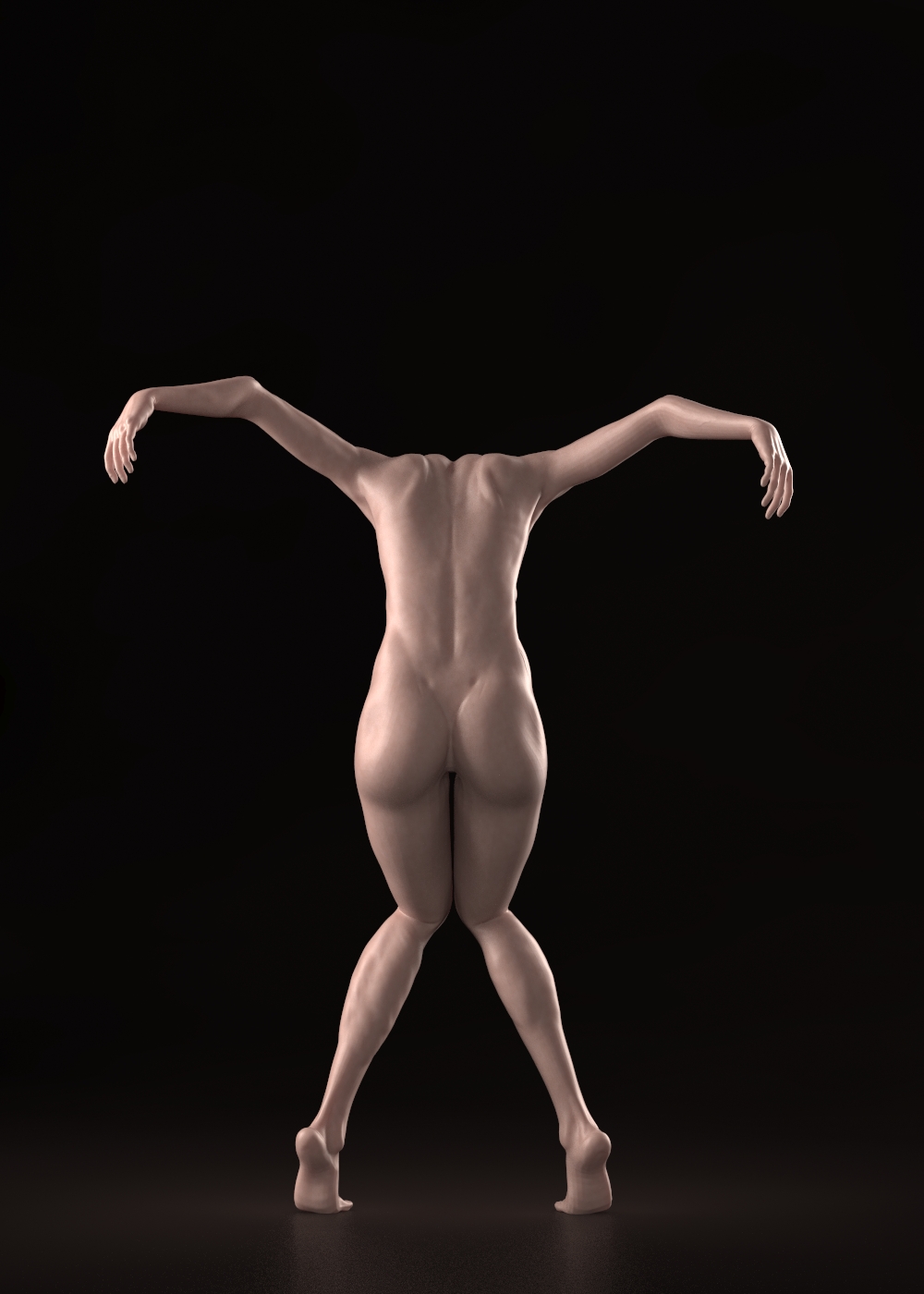
Torso: this is really quite good. The only areas I would work on are the overly sagging oblique muscles on the hips - on females it’s a very gentle flow The only two other spots that are slightly off are the muscles into the scapula (it looks largely flat, but there’s a LOT of muscles flowing from that one bone), and the but looks a bit too masculine (because the connection with the femur is a little to squared off). Also, maybe try giving some subtle asymmetry between the left and right sides of the body. Just shifting down to your lowest subdivision level and using the Move or Move Topology brush and slightly nudging some areas around is usually enough. Just remember that a person using their right arm more than their left will likely have larger muscles on the right side. Same thing will go for pretty much all muscles - left and right sides will get used differently and therefore have slightly different shapes. But keep it subtle. Especially on female figures.
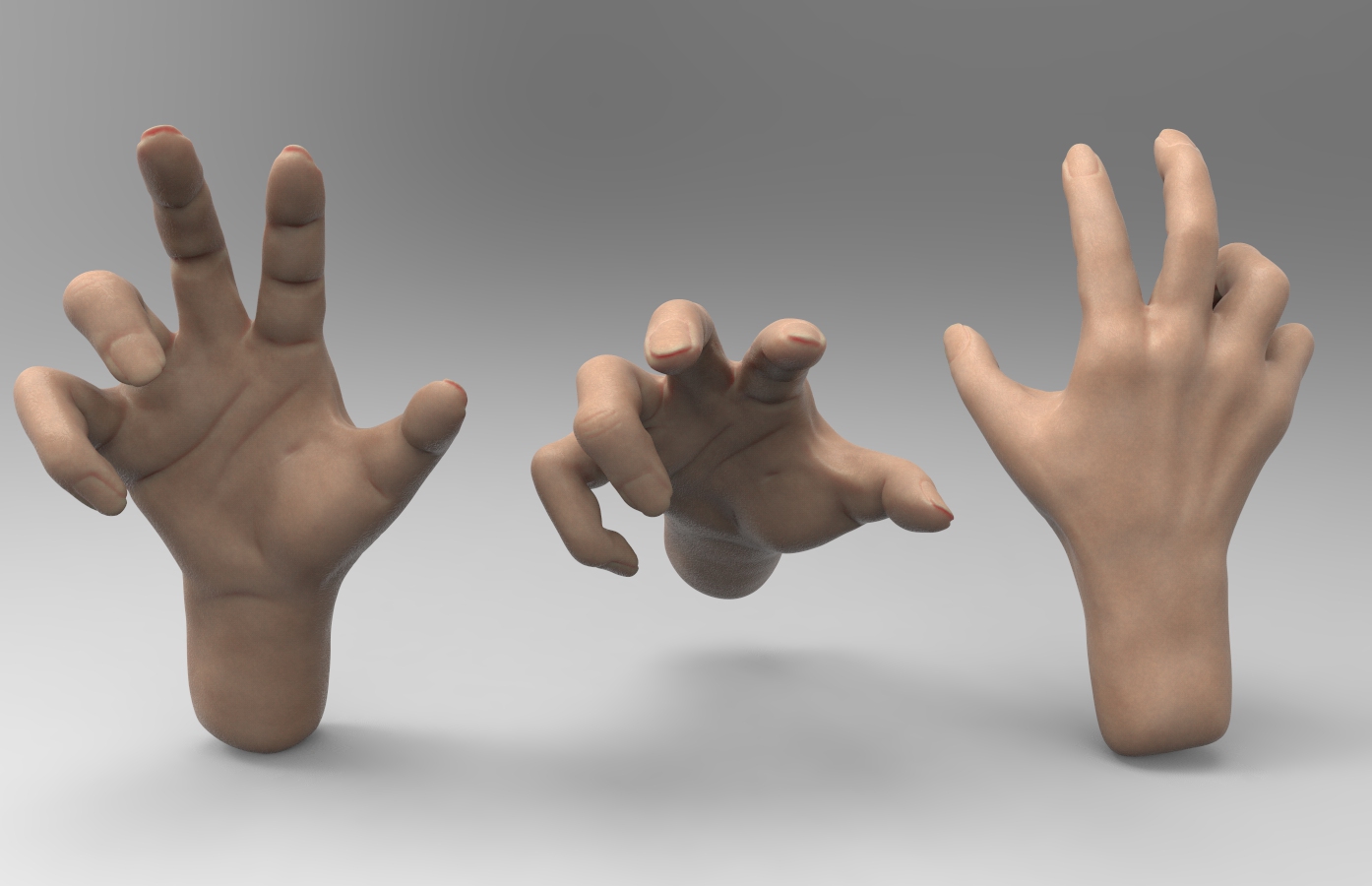
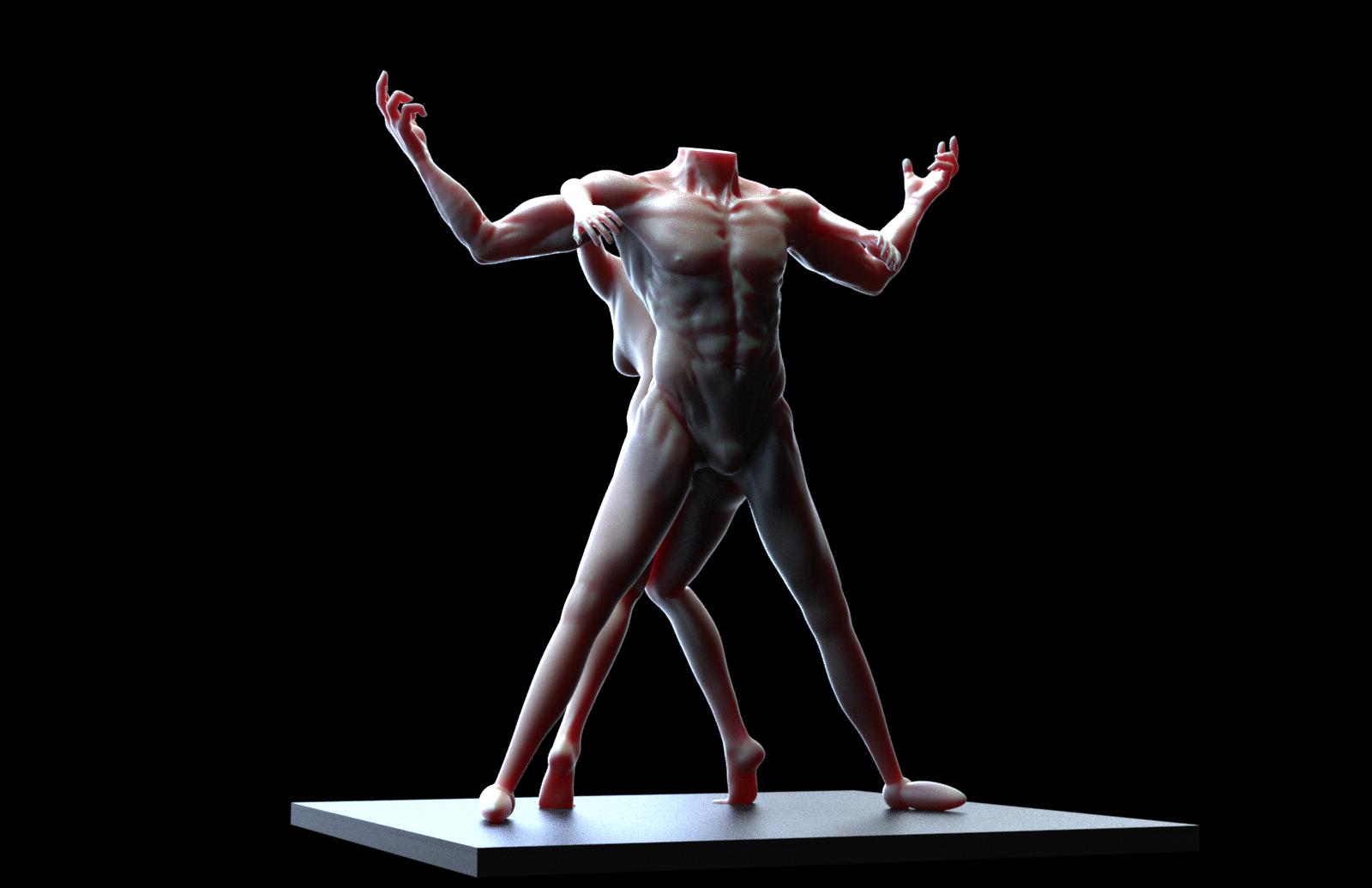
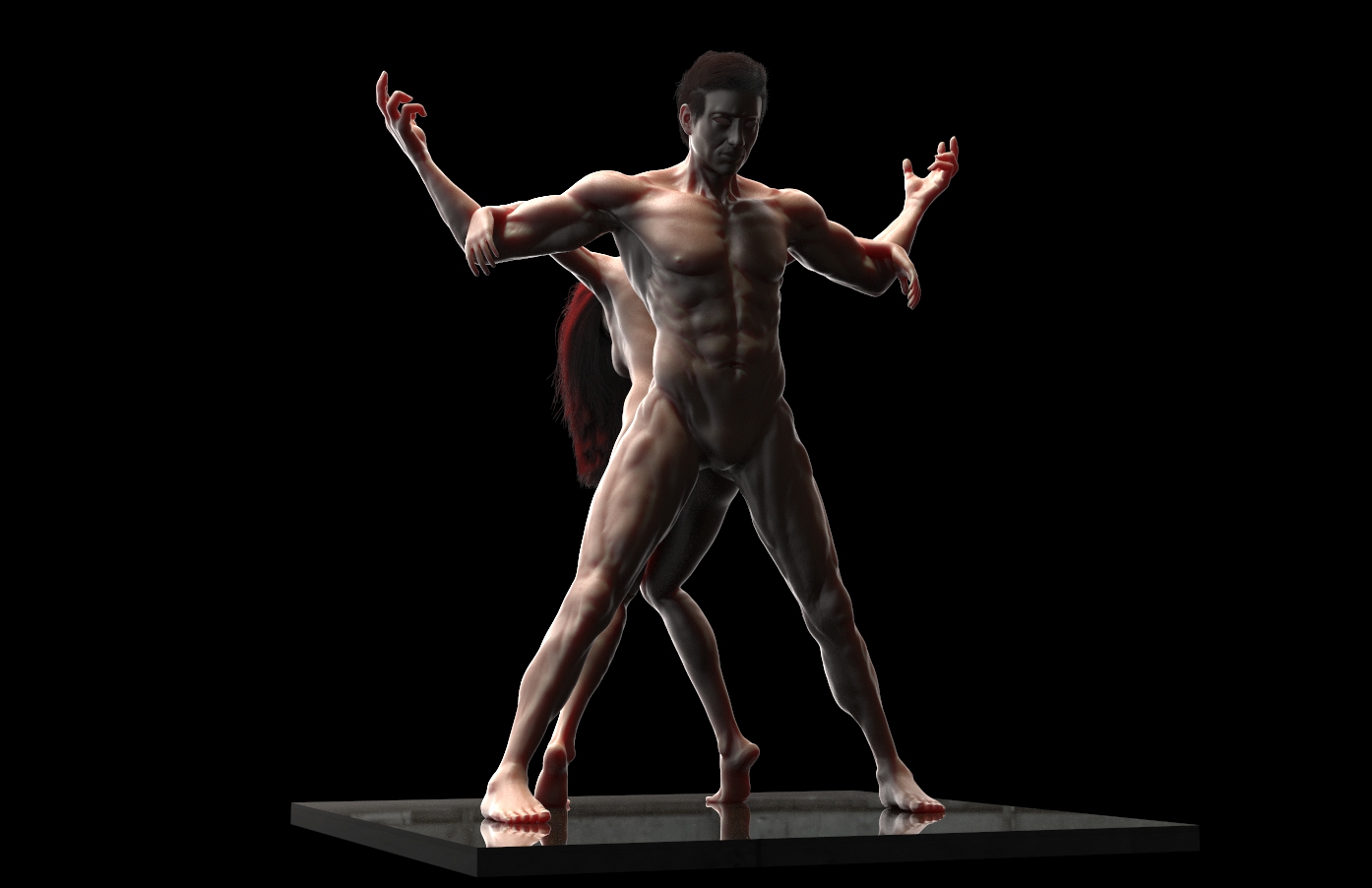
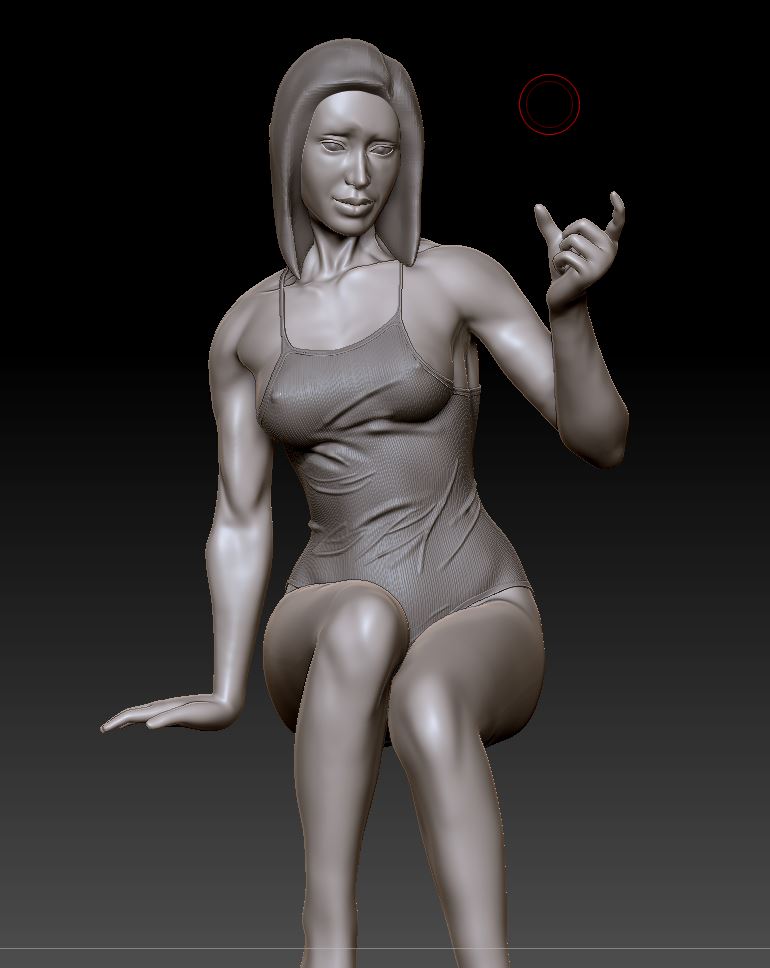
Fingers: Fingers are tough. Yours look a little boxy at the tips. Trust me- these are probably one of the hardest parts of the body to really do well. Just learn the forms per finger and figure out how they deform as they’re bent. That area just takes practice.
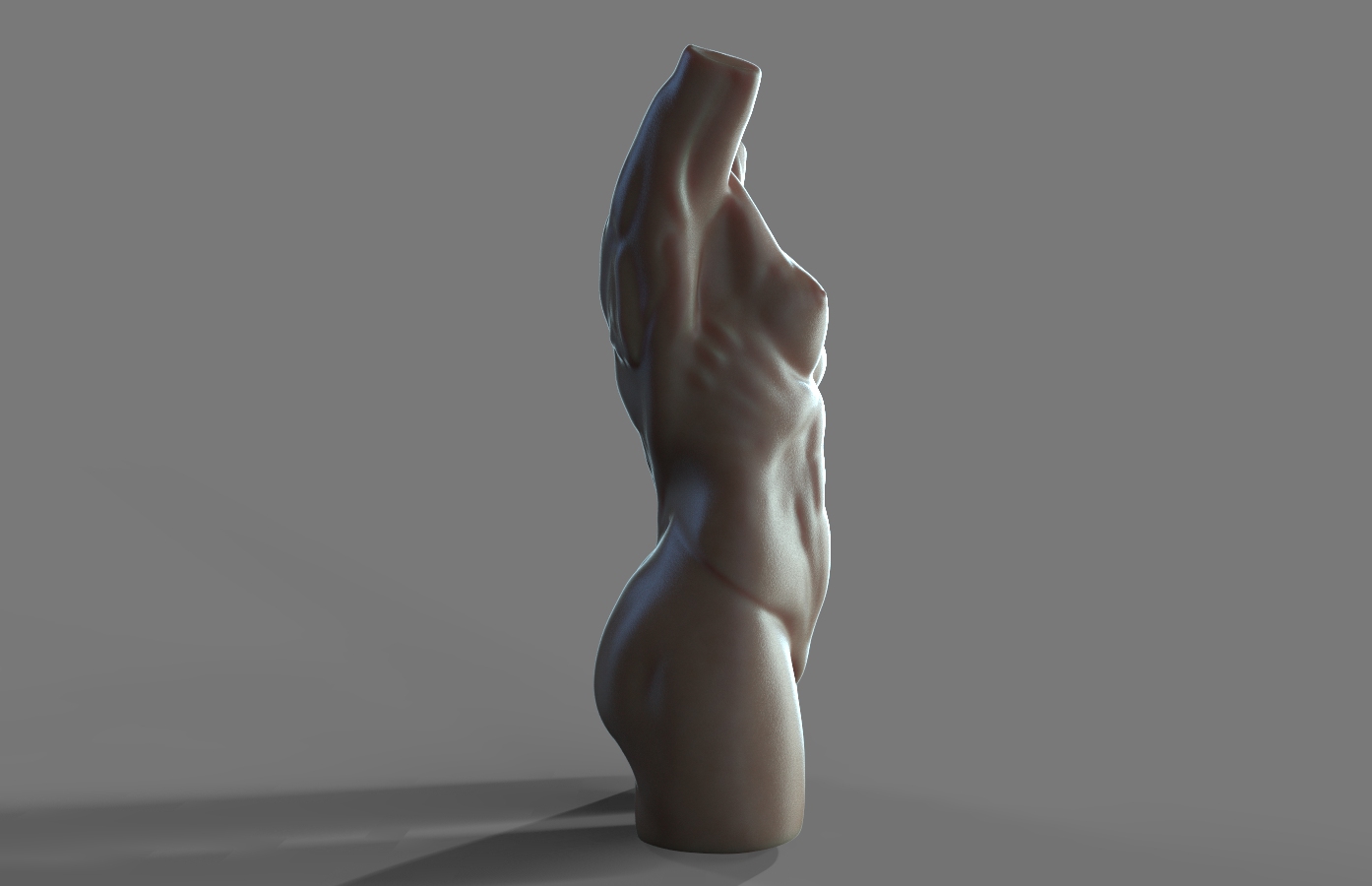
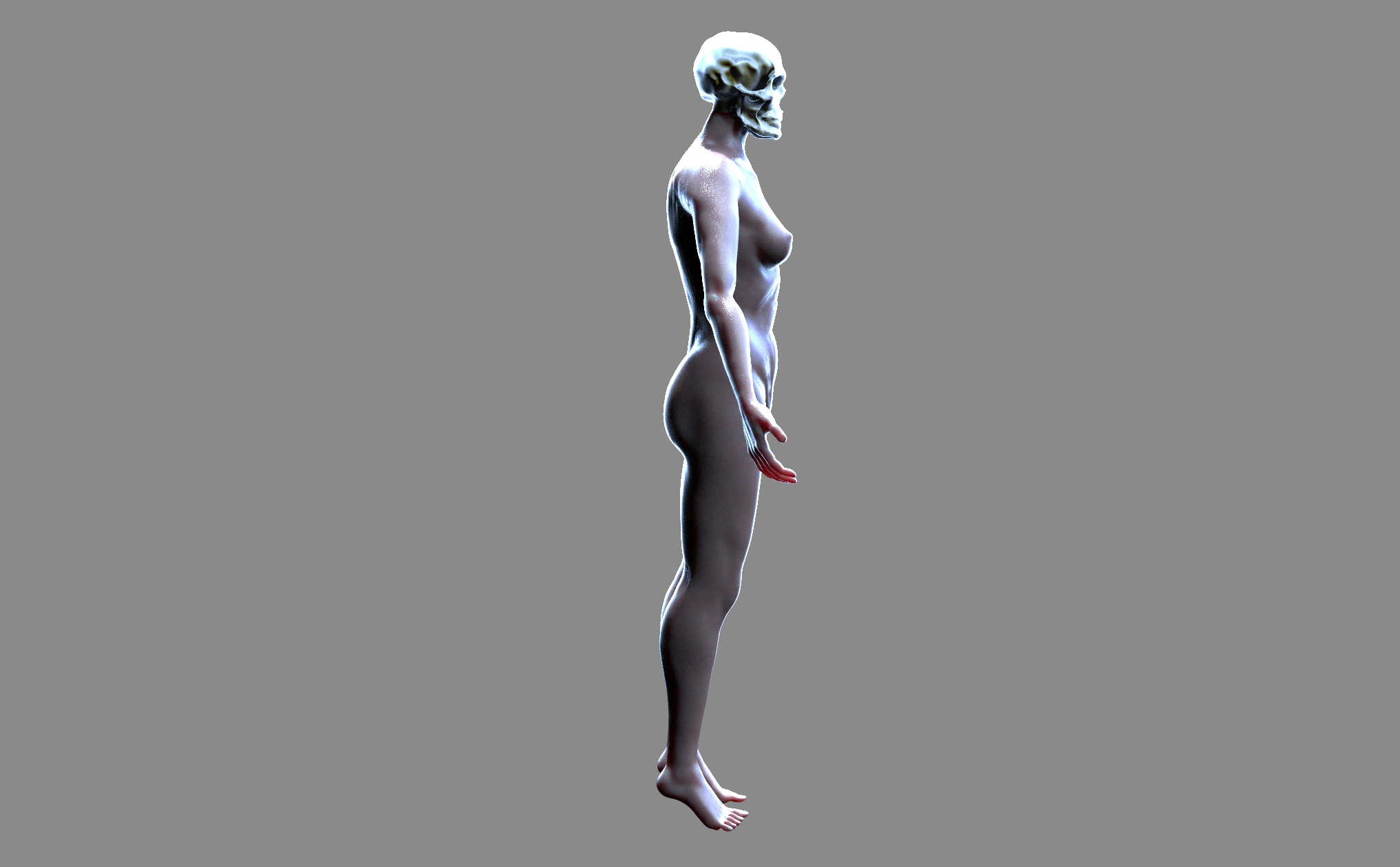
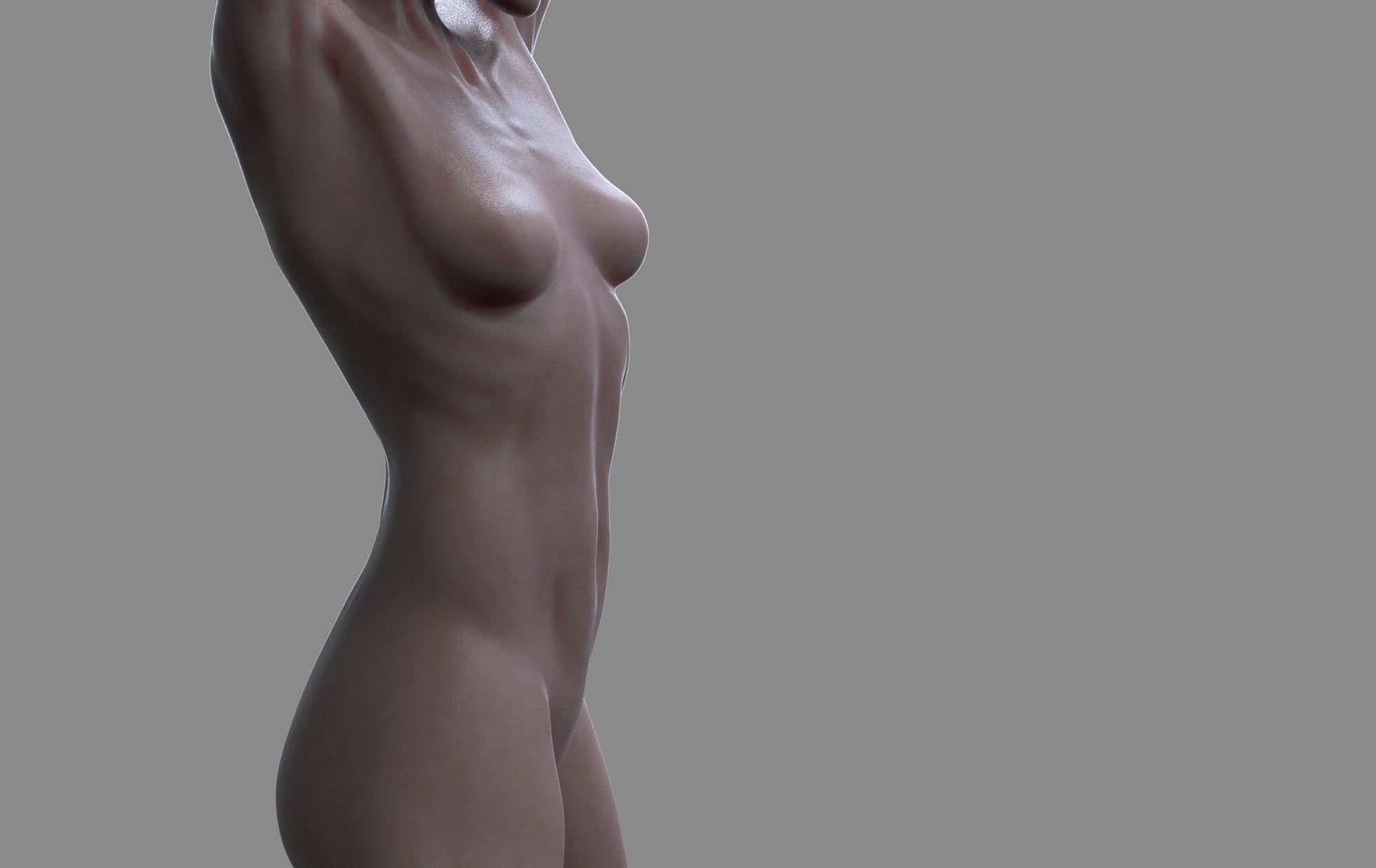
Side view: This is surprisingly well done. You did a really good job handling the lifting of the breast while the arm lifts. Just keep in mind that when an arm lifts, it pulls and stretchs the skin along with it, so it would smooth out the oblique/hip line that is so prominent there, along with stretching out the oblique itself, making it not as thick/bulky.
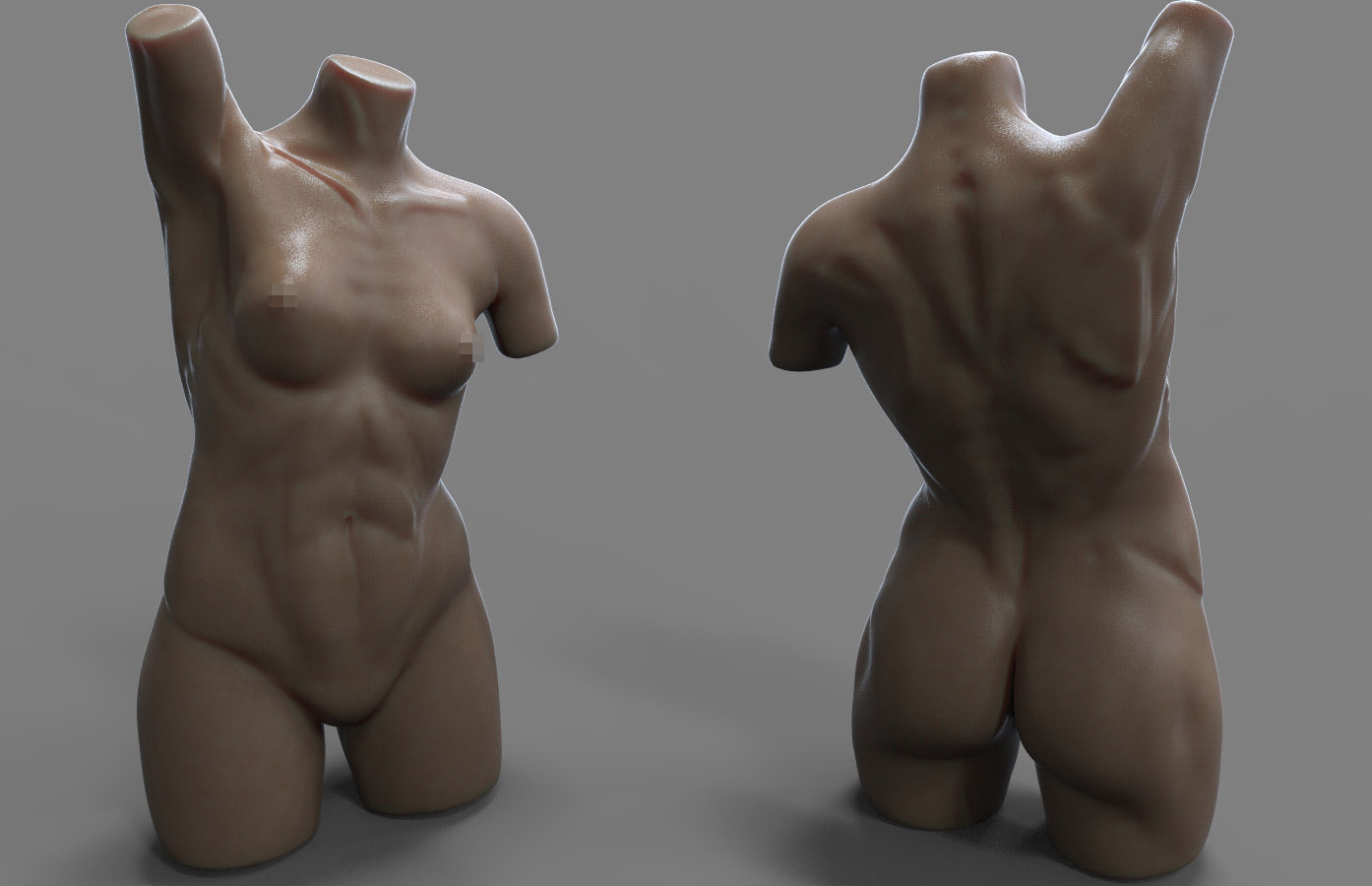
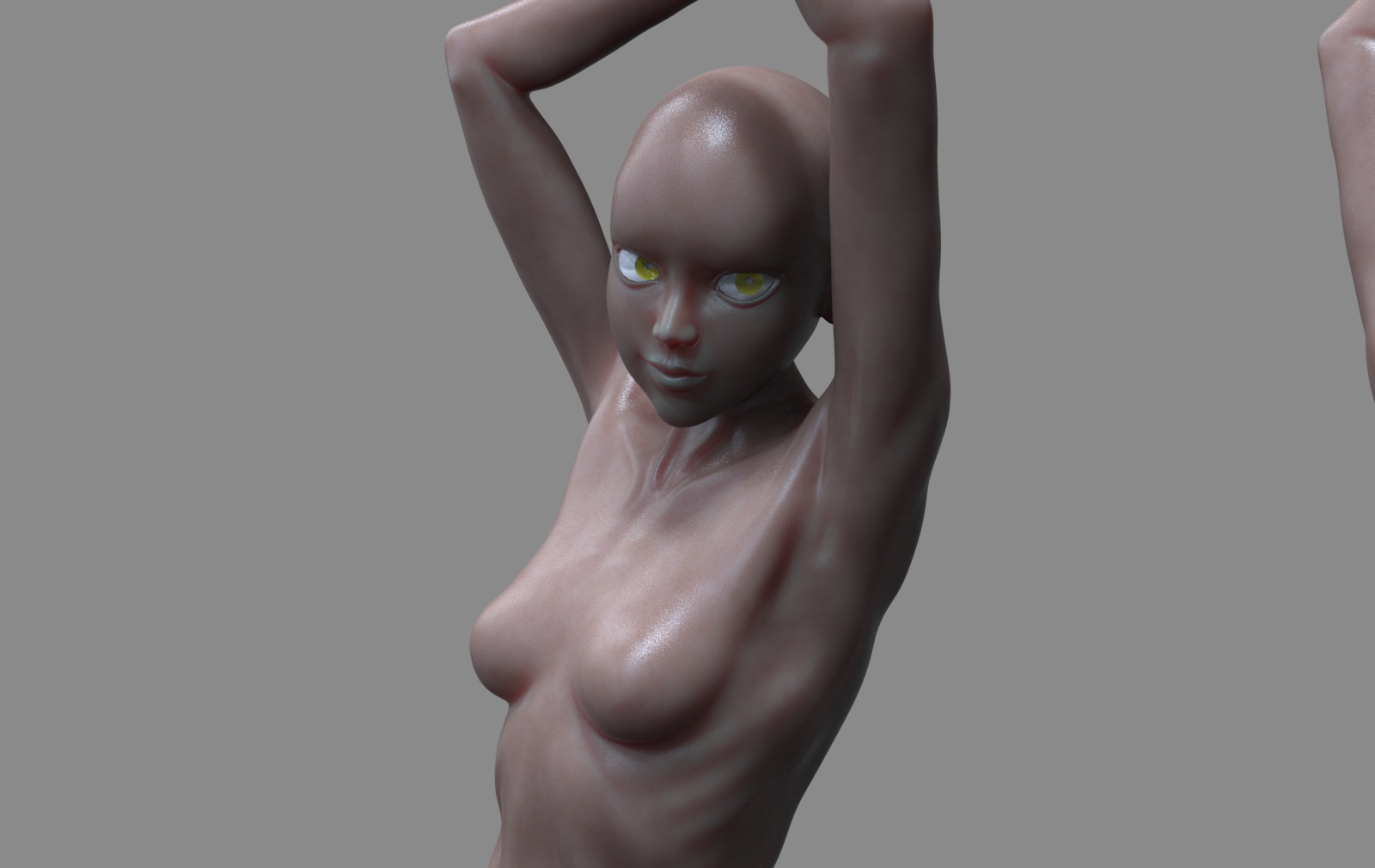
Front and rear view, arm stretched: Pretty solid, again. Soften the trapezius/scapula area on the character-left side of the body. There should be no depth there when the arm is down at your side because the trapezius muscles actually flow into and over the scapula bone, but when the arm is lifted, it bulges because the muscles is tensing up to lift the arm. The scapula looks a little squared off too, on the right side. Again, pay attention to where the skin is stretching and muscles are flattening and where other muscles are squashing/bulging.
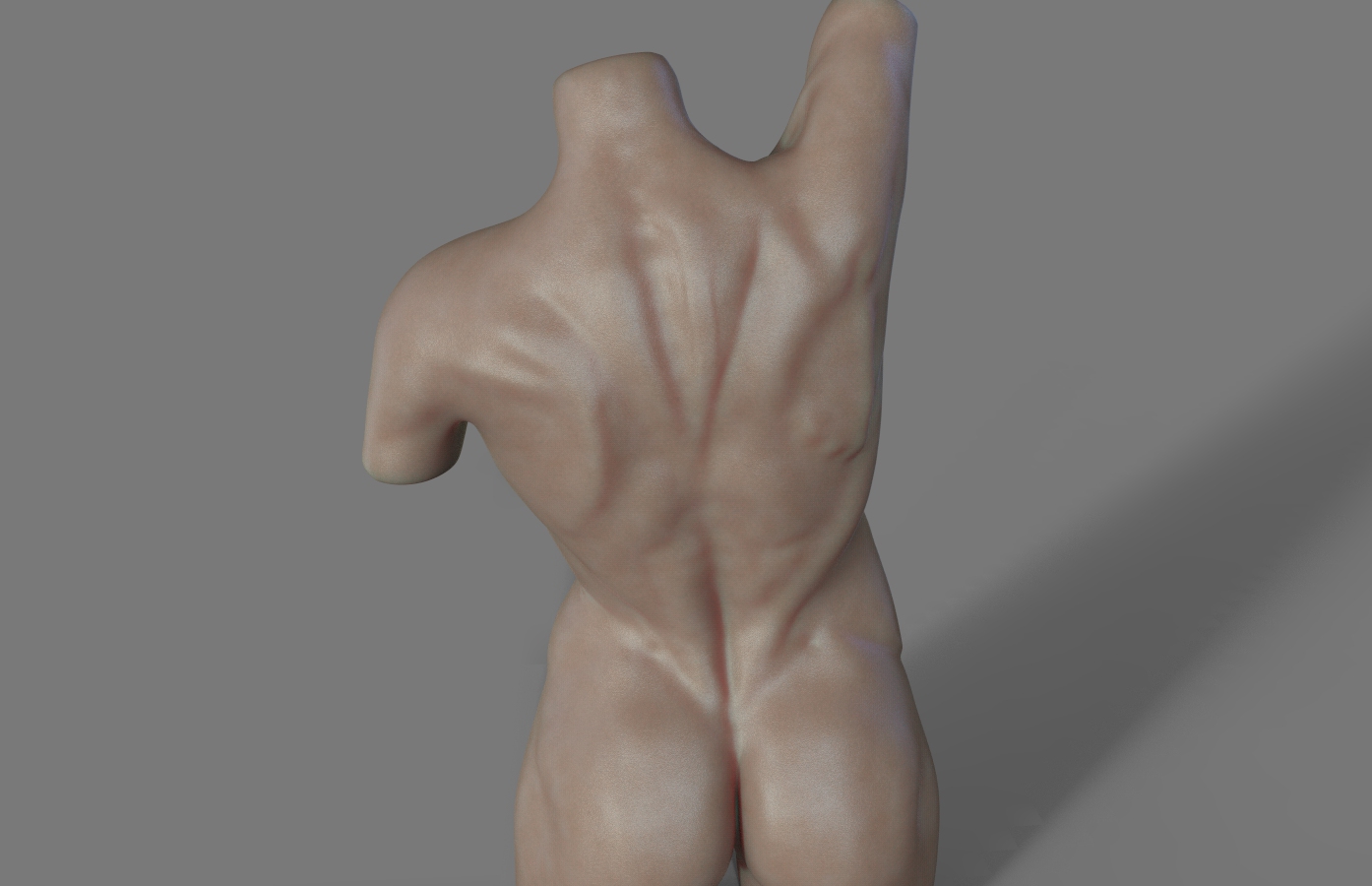
Back view, arm stretched: Pretty good, but the lattisimus dorsi muscles are much softer than what you have (the big batwing muscle that covers most of the lower back). It’s a huge muscle and by the time it gets to the side of the body, it’s really mostly just flattened fascia tissue. Also, it connects to the entire illiac crest (upper rear hip bone), not the center of the back. Only other notes are the same as the front view.
Really this is all pretty solid work for just learning. Sculpting in how the body moves is where the magic comes out, but you have to know where the muscles go first, and then where the body fat is located, and then know that there’s skin covering that. By the time you get to the skin it’s all pretty subtle. (Unless you’re sculpting a body builder, who has nearly zero body fat and pronounced muscles.)
Good work and keep it up! I’m interested to see what else you post!